Why I started the Field of Play conference
When I first started working in football I recall being struck by two things. The first was that there was quite a lot of publicly available data. That was unusual compared to the other industries I’d worked in, where there was almost nothing. Most businesses are of course very protective of their first-party data and football is no different in that respect. But the majority of football data is sourced as second- or even third-party data, and the companies that collect it have a reasonable incentive to give some of it away. Not enough to be really useful but enough to show how useful it can be.
At the same time, football itself was incredibly insular. While pioneers like David Sumpter were starting to teach people how to think about football from a mathematical point of view, data, software and decision-making concepts that were pretty standard in most of the industries I’d worked in were often completely unfamiliar. And it wasn’t that difficult to see why. In my whole time working at Manchester United, I met probably two or three people on the football side who had ever worked in another industry.
The conferences I went to reflected that insularity. They were often entertaining and enjoyable, but they didn’t really feel like they were trying to move things forward. Most were organised by the same companies selling the data and, understandably, their conferences were ultimately there to help sell their products. That was very different from what I’d experienced in industry, where meetups and conferences might have a commercial element, but it was often not the first reason they existed. And inevitably, that difference was reflected in who got to stand on stage and what they talked about.
And that’s more or less where the idea for Field of Play came from. There were processes and solutions in other industries and other sports that football simply wasn’t being exposed to, partly because it wasn’t bringing enough people in from those worlds. And the same was true of people from different backgrounds, who were largely absent from both the stages and the audiences of the conferences I attended. Football had an enormous amount it could learn from people outside its usual circles, but it wasn’t really looking for them.
That was the idea. The problem was that I didn’t really know how to put on a conference of any real size. I’d organised meetups, but never anything for more than about 100 people. Fortunately, one of the brilliant people I’d hired over the years was a data scientist called Fiona Pye, who was on the organising committee for PyData Manchester. I went to her with the idea and, honestly … she wasn’t that interested in doing something about sport. But she did introduce me to John Carney, one of the other organisers, and between us John and I cooked up the plan for the first Field of Play.
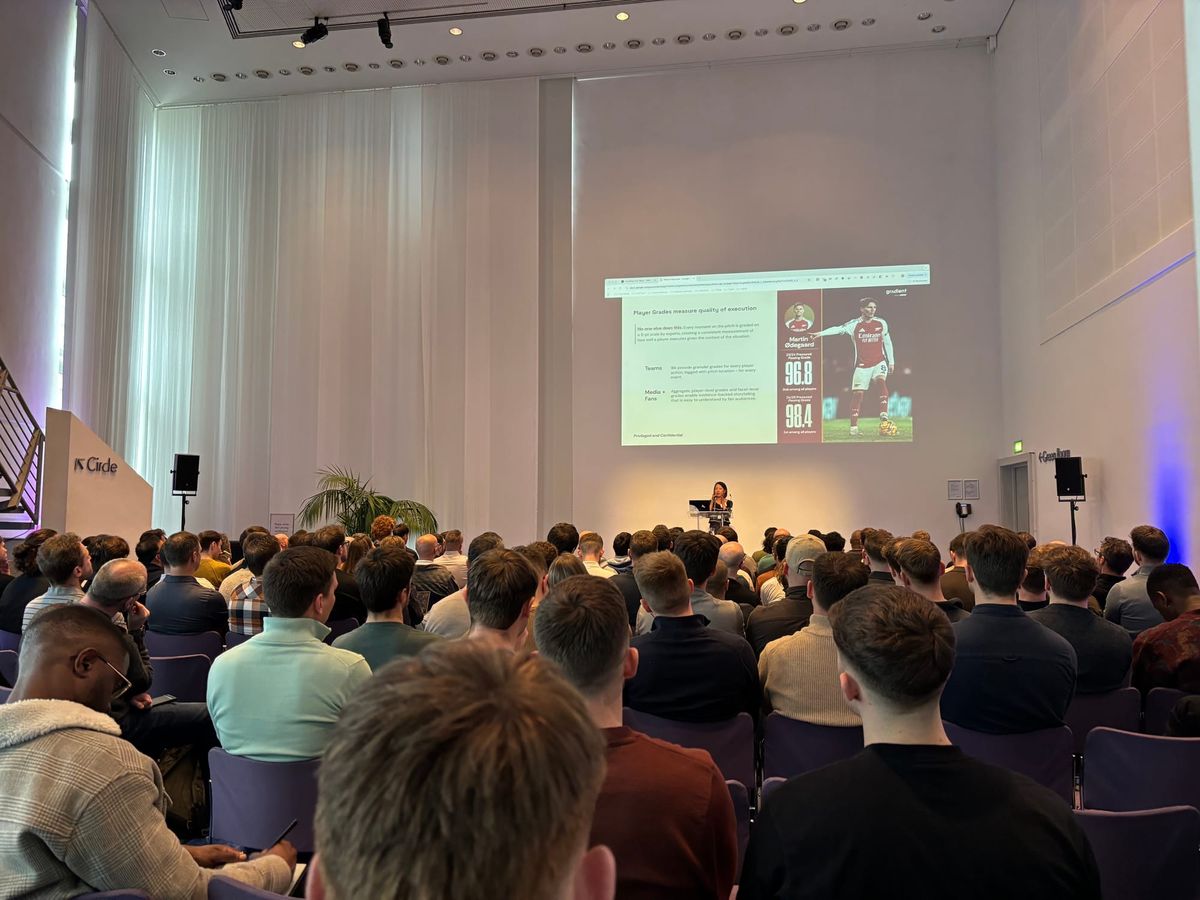
That first event was a huge amount of work. We didn’t have a name. We didn’t have a venue. We didn’t have a brand. We hadn’t really decided what the theme was going to be or how much to charge. About eight weeks out, we’d sold twelve tickets, and it was becoming increasingly stressful. But then … things started to move. We more or less sold out that first year.
Since that first edition, we’ve had speakers from a range of different sports: cycling, fantasy football, baseball and the NFL. We’ve also had journalists, experts in education and of course plenty of people from within football itself. It has begun to feel much more like what I had in mind when we started out. Football has changed a lot since I first started working in it, but there is still a lot it can learn from outside the game. There are better ways of doing things, interesting ideas in other sports and plenty of people who have something useful to say but don’t normally get the chance to say it to a football audience.
So there you have it. We have another edition in March and then something big later in the year. If you want to volunteer or want to speak or know a great speaker then message me. Or just come along. I’m not trying to sell anything. I’m just trying to get the best people together in the best venue, to make the most difference I can to an industry that could still be a lot better.